Brugmansia
Brugmansia is a genus of one of two related plants known as Angel's trumpets, the other genus being Datura. more...
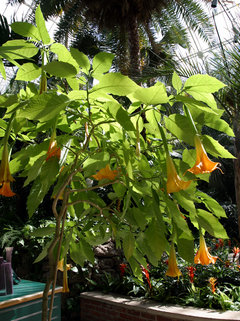
Brugmansia are large, tree-like plants, reaching heights of 10 feet or more, with tan, slightly rough bark. The leaves are generally large, 8 to 12 inches (200 to 300 mm) long, and are covered with fine hairs. Brugmansia are tropical plants, native to northwestern South America.
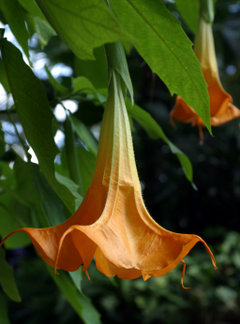
The plant gets its name from its large, very dramatic trumpet-shaped flowers, about 9 inches (175 mm) long and 6 inches (150 mm) across at the wide end. These flowers hang down from the branches reminiscent of heavenly trumpets directed towards the earth. They have a delicate, attractive scent with light, lemony overtones, most noticeable in the calm of early evening.
Although the original variety has white flowers, which appear to glow in the sunset or if lit from beneath at night, other varieties have other flower colors. Some varieties of B. x candida produce white, yellow, pale orange or pink flowers; B. x insignis produces white or peach flowers; B. versicolor flowers start off white and turn salmon pink. There are varieties producing doubled flowers, as well as some with variegated leaves.
Cultivation
Brugmansia are easily grown in a moist, fertile, well-drained soil, in full sun to part shade, in zone 9 or warmer climates. They begin to bloom as early as April or May in warm climates and continue into the fall, often continuing as late as December in warm winters. In cool winters, outdoor plants need protection, but the roots are hardy and will resprout in April or May. They can easily be propagated by rooting a 6 to 8 inch (150 to 200 mm) cutting taken from the end of a branch during the summer.
Related to Datura
The other plant known as Angel's Trumpet is closely related to Brugmansia, but looks quite different. Datura metel is shorter, and more of a shrub than a tree, with leaves which are not hairy and often have a purple tint to them. The young stems are typically shiny, dark purple. It has similar trumpet-shaped flowers, white, purple and white, or pale yellow, and more commonly double-flowered; however, unlike Brugmansia, Datura flowers are somewhat less fragrant and point upwards, causing them to sometimes be called, in contrast, 'Devil's Trumpets'.
Toxicity
As with many members of the nightshade family, all parts of Brugmansia and Datura plants are toxic. The plants are sometimes ingested for recreational or shamanistic intoxication; however because the potency of the toxic compounds in the plant is variable, the degree of intoxication is unpredictable and can be fatal.
Read more at Wikipedia.org



 Contact
 Home
Home Aquatic Plants
 Annuals
 Brugmansia